


The Order of the Hatchet of Tortosa — Part I

Illustration by Marina Polo for Llegendàrium.
The legend of the Order of the Hatchet of Tortosa tells how the women of the city organised its defence against the threat of a Muslim attack following Ramon Berenguer IV’s conquest in 1148. In this first article, we will read the account recorded by Cristòfor Despuig and explore its historical context and the customs and privileges associated with it, notably the wearing of a garment bearing the emblem of a red battle-axe.
Over the centuries, the story grew until these honours came to be attributed to the foundation of a medieval order for women, an idea absent from Despuig’s account but still familiar today. In the second article, we will trace this transformation through the writings of the authors who transmitted the legend. A third article will examine the legend of the Portal del Romeu, or Pilgrim’s Gate, likewise associated with the defence of Tortosa and depicted in a surviving stone relief (Massip 1967; Miravall 1968).
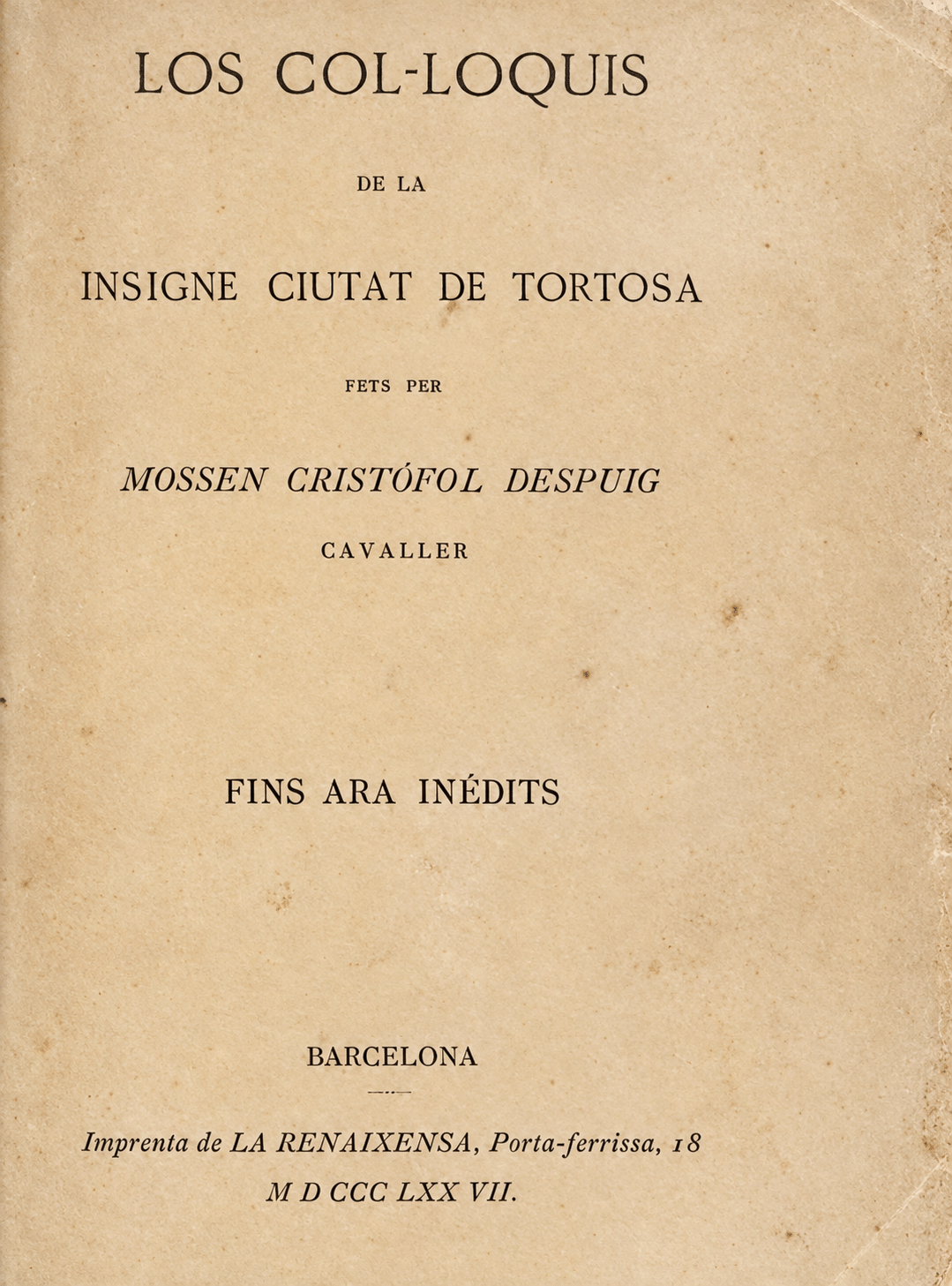
The earliest known written account of these legends appears in Los col·loquis de la insigne ciutat de Tortosa (Dialogues of the Illustrious City of Tortosa), by Cristòfor Despuig (1510–1574), a writer and gentleman of the Catalan Renaissance. Written in 1557 and first published in 1877 in an edition prepared by Fidel Fita, the work presents a conversation between three characters who discuss historical, political, religious and social questions while defending the Catalan language and affirming the importance of Catalonia’s past. Among these reflections, Despuig also records local legends, customs and traditions (Despuig 1877 [1557], Dialogues III–IV; Solervicens 1997).
Below are the passages devoted to these legends, translated into English from my modern Catalan adaptation and preserving Despuig’s dialogue format.
The Legend of the Order of the Hatchet of Tortosa
Dialogue III. The Siege and the Women’s Intervention
LÍVIO. As for the reason behind those extensive liberties and powers of self-government that so astonish you, Don Pedro, this is what happened.
A few months after conquering the city and the Suda fortress, the Count of Barcelona departed to conquer the city of Lleida. While the count was engaged in that undertaking, amid great hardships and difficulties, the reinforcements that the Moors of Tortosa had been awaiting, as I have already mentioned, and which had failed to arrive in time to relieve and save the city, advanced towards it in an attempt to recover it.
They subjected it to the most relentless siege ever laid against a town. The Moors of Valencia, Murcia, Aragon and Catalonia, where many still remained, gathered there. And although the city’s perimeter is as extensive as we can see, they surrounded it on every side and even established part of their camp facing the river. Nevertheless, because of Tortosa’s position, some route always remained open through which its people could seek and receive assistance.
The citizens who had recently settled there resisted the Moors’ determination and fury as bravely and for as long as they could. But as their situation grew desperate and the enemy never ceased pressing the beleaguered city, they decided to send for help from the count, who was then in Urgell.
He replied that he could not possibly come to their aid at that moment, being too deeply committed to his conquests in those lands. They must therefore arrange their own defence and find whatever remedy they could, for he could do no more.
DON PEDRO. What a cruel reply! How painful it must have been to hear it in such desperate need!
LÍVIO. You can imagine how those poor people must have felt on receiving so curt and cruel a reply from their lord, in whom they had placed all their hope.
Disillusioned with the count and seeing how little help they could obtain elsewhere, the citizens convened the council to consider the gravity of their situation. After debating many proposals, they reached a decision.
They could neither hold out by their own strength nor obtain relief from their prince and lord. Moreover, the enemy’s determination and threats convinced them that no mercy would be shown, for their opponents resented certain acts of ill-treatment they claimed to have suffered at Christian hands during the capture of Tortosa. They therefore feared that, should they fall into enemy hands, they, their wives and their children would be treated with the utmost cruelty.
They accordingly agreed to kill all the women, children and others unable to bear arms. They would then burn all their treasures and clothing, as the people of Saguntum and Numantia had done in ancient times. Once this was done, they would make a desperate sortie and die fighting the enemy.
FÀBIO. How terrible! What anguish those poor Christians must have been suffering!
DON PEDRO. Is this story true, Lívio?
LÍVIO. There can be no doubt about it. What happened afterwards, and the measures subsequently taken concerning the city’s liberties, bear ample witness to what I have said.
When everyone had agreed to this resolution and they were about to carry it out, one of the men who had attended the council, deeply distressed by the decision and greatly attached to his wife, could not keep himself from revealing everything they had agreed.
Greatly alarmed, she said to him:
“When you return to the council, say nothing, and let no one realise that you have told me anything. I shall try to find a better remedy for so great a calamity.”
Having carefully considered their urgent predicament, this resourceful woman gathered all the other women of the city in a church as discreetly as she could. She explained everything that had happened and everything she had learned, without revealing who had told her, and warned them that together they must find some remedy for the disaster threatening them. Otherwise, they must consider their own destruction and that of their children certain.
When the assembled women heard this distressing news and understood the cruel and desperate sentence pronounced against them and their children, they debated various proposals. Finally, they decided to send a delegation to their husbands, who were still meeting in council.
They begged them not to carry out the unjust sentence they had agreed upon, for it was no Christian deed. They should consider how greatly they would offend Almighty God by showing such distrust of his mercy and omnipotence when he was so merciful.
If other peoples of Spain had followed so cruel and disastrous a course, they had been unbelievers without faith, who placed all their happiness and glory in worldly things. They, by contrast, must remember that they were Christians and that, although God sometimes punished them for their sins, he did not abandon them for ever.
Finally, they explained an idea they had devised to remedy the evils threatening them, one they considered both sound and well suited to their circumstances.
All the women would arm themselves and take to the walls with spears and other conspicuous weapons of iron. With many banners and drums, they would make a great display and all the noise of an army. At the same time, the men, fully armed and resolute, would attack the enemy encamped on the side of Sant Joan, which on account of that day’s events came to be called Sant Joan del Camp, as it is still known today.
First, however, they would send two men towards the enemy camp as though dispatching them elsewhere with letters. These men would allow themselves to be captured by the Moors without revealing the deception and spread the news that a large force of reinforcements had entered the city during the night.
If they did this, the women had firm hope in God that they would achieve a complete victory.
DON PEDRO. An admirable idea indeed! It resembles the stratagem the Greeks used to destroy Troy, when they left the Palladium and sent Sinon to explain their feigned purpose.
LÍVIO. Indeed. But that was done to destroy that city, and this to save ours.
Having heard and fully understood the message and resolve of those wise and courageous women, the citizens accepted their advice as though it came from God.
First, they made all the necessary preparations. They sent the men towards the enemy camp as agreed, and the women, armed, took to the walls as planned.
Then the Christians sallied forth with tremendous fury and courage. They fought so effectively that they slaughtered countless Moors. The rest fled in such terror and confusion that they also put to flight the other camps surrounding the city. And indeed, all fled, leaving not a single man holding his position.
Thus the Christians remained masters of the field and of everything the Moors had left behind, which was an immense quantity.
FÀBIO. Holy Mary! Lívio, is that how it happened? Upon my life, how glad I am to hear it! I have never heard anything like it.
LÍVIO. I can well believe it. The people of this city have always been careless about knowing who they are and where they come from.
The feat performed by the wives of the Catalans and the Almogavars at Gallipoli, near Constantinople, in the year 1308, when their husbands went out to fight and defeat the Genoese, has not fallen into such oblivion. Zurita describes it very well in his Anales de Aragón, at the end of the seventh chapter of the sixth book of the second volume.
Even Tortosa’s true name was scarcely known among its inhabitants until some twenty years ago.
DON PEDRO. I consider what you have told us miraculous.
LÍVIO. So it should be considered. And a miracle certainly played its part, if what is told of the pilgrim really happened.
DON PEDRO. What happened with the pilgrim?
LÍVIO. While the battle between Christians and Moors was at its fiercest, a body of Moors had not heard of the others’ defeat, being far from the fighting. They decided that, while the others were engaged in battle, they would enter the city.
Just as they were about to enter, a pilgrim who had been sitting at the gate stood in their way. He fought the Moors with such courage and fury that he drove them all back and put them to flight. This happened at the very hour when the other Moors had already been driven from the field.
FÀBIO. I too have often heard the story of the pilgrim, but I did not know on which occasion it happened.
LÍVIO. Nor do I know for certain, and I cannot be very sure of what I have said. But that is how the story is told, and such is the common report and general belief, with no one contradicting it.
Moreover, we can see with our own eyes the figure of this pilgrim, carved in relief, at the gate where he was sitting when the Moors were about to enter. They say it was placed there to preserve the memory of this miracle for ever. And to this day that gate is called the Portal del Romeu, the Pilgrim’s Gate.
DON PEDRO. So heaven and earth had joined forces to save this city. What happened afterwards, sir?
LÍVIO. Once all this was over, Count Ramon Berenguer, having freed himself from his other affairs, came from Lleida to Tortosa to apologise and justify his neglect or abandonment of these people, whom he had failed to help in such urgent need.
But when he reached the gate, the citizens most politely shut it in his face.
DON PEDRO. Oh, what a fine sequel, upon my life! That was splendid indeed!
FÀBIO. I am beginning to understand that we are the sons of braver fathers than I had imagined, and that we should take greater care to preserve the memory of deeds of courage and virtue.
LÍVIO. I am glad, Fàbio, that you are beginning to recognise your own worth and grasp the matter. And if you wait, you will hear more. But I fear that afterwards you will forget it, and that the only benefit will be the amusement it gives you now.
Would to God I were less right about that! My joy and satisfaction would be no small thing, nor would the lustre it brought the city, greater than that which it now possesses.
To return to our story, when the count saw the gates closed in his face, and considered that they were justified in doing so, he began to address them with soothing words to regain their affection and obedience.
He urged them to remember that it was he who had settled them in that fine and fertile land, at the cost of so much effort, hardship and expense. No one regretted his inability to help them more than he did. And he assured them that he would compensate them in future in such a way that they would clearly see how much he cared for them.
After hearing these and other very gentle words from the count, the citizens replied that they certainly had no wish to cease acknowledging him as their lord. On the contrary, they were pleased to remain under his rule and lordship.
But since he had abandoned them in so great a calamity and need, obliging them to escape total destruction through their own strength and ingenuity, it was as though they themselves had conquered the city. It was therefore only just that the count should confirm their settlement there on their own terms and grant them the privileges and liberties they desired.
The count willingly consented to their request and gave them leave to draw up, as they thought best, the laws and statutes by which they were to govern themselves.
With this authority, they drew up the customs that Fàbio must have seen. And the count confirmed them exactly as they had written them. But they claimed so much that they exceeded every limit of reason and moderation. They established certain customs contrary to canon law and the practices of good Christians, so that these later had to be corrected, restricted and given a better form.
[The dialogue continues with other matters concerning Tortosa’s privileges and government. The subject of the women is taken up again at the beginning of Dialogue IV.]
Dialogue IV. The Hatchet Emblem and the Women’s Privileges
DON PEDRO. Lívio, before we become further entangled in other conversations, you must do me the favour of telling me something I am most eager to know. What reward, what honour did the citizens here grant the women for so illustrious a feat and for advice that proved so beneficial and successful?
Certainly, I have read of nothing more remarkable, and I am greatly astonished that it should lie so dormant and buried in oblivion.
The decision of the people of Saguntum and Numantia, which resembled that taken by the people of Tortosa, is celebrated throughout the world, and no one is ignorant of it, despite its wretched outcome. Yet the decision of the citizens of Tortosa, which ended so gloriously in honour of the name of Jesus Christ and to the benefit of the people, remains hidden and unspoken of.
What a misfortune! What dreadful neglect! What a silence…! I cannot comprehend it.
LÍVIO. It is natural and customary for men to remember evil more readily than good. The reason is that, just as nature is more inclined towards evil than good, according to the philosopher’s rule, so it embraces and retains the memory of evil more readily, finding it more agreeable.
Nevertheless, it is certainly a great misfortune that something so exceptional and important should lie so deeply buried. There is no denying that.
But do you know where I think the fault lies? In the fact that men have always been most reluctant to write in praise of women. And women, poor things, lacking an education, are unable to do so themselves. Thus their good deeds and virtues remain obscured and forgotten.
Yet since truth is the daughter of time, time itself, despite men’s negligence, brings it forth when the moment comes, as is happening now that we have opened this conversation. You will learn, and afterwards make known, what really happened, just as I have related it.
As for what you wish to know, namely what honour and reward were granted to those courageous and wise women for so heroic a deed, I must tell you that it was so little as to be almost nothing compared with what it ought to have been.
I do not believe, however, that this arose from the men’s meanness, for they can hardly have failed to recognise the merit of so remarkable a deed. It must have been due to the great moderation of those honourable women. We may believe that, possessing the virtue of fortitude so fully, they cannot have lacked temperance either, for these two virtues usually go together.
What was done, or what I have found was done, is this.
First, to preserve the memory of that feat, they decreed that all the women should wear a battle-axe emblem of crimson or scarlet cloth over their clothing. They were to place it on a garment made like a Carthusian lay brother’s scapular, which they called a passatemps and which appeared to represent a military surcoat.
They also decreed that when a bridegroom went to the bride’s house to take her to Mass, as is customary, the women accompanying her, who were always numerous, should walk ahead of all the men, even if royal or municipal officials were among them.
FÀBIO. I have seen this custom observed, and not so long ago.
LÍVIO. So have I.
They likewise decreed that women should pay no duties on their veils and other headwear. And if they outlived their husbands, all the clothing and jewellery their husbands had provided for them should remain their own property, whatever its value.
That is what was done for them.
I have also heard something else, although I cannot be as certain of it as I should wish. They say it was decreed that, when the couple attended their wedding Mass, the bride should sit on the right. But the cathedral clergy, not knowing why this was done and considering it a bad custom and a breach of decorum rather than a mark of precedence, caused it to fall out of use.
DON PEDRO. It was all very well arranged. But those hatchet emblems must have been a fine sight! How elegant the women must have looked with that distinctive badge! They must have resembled the nuns of Jonqueres in Barcelona.
I tell you, it has been a great misfortune to let so remarkable a thing disappear. Has it been out of use for long?
LÍVIO. It cannot have been very long, for I have heard the Reverend Master Baltasar Sorió, a lecturer at the cathedral and a man of great authority and learning, who, as you know, is now over ninety, say that he had seen some of those garments which, as I mentioned, were called passatemps, bearing the hatchet emblem in scarlet cloth.
He had seen them at Archdeacon Garret’s house during his first years in Tortosa. It is true that they were no longer worn then, but they cannot have been abandoned for very long, since they could still be found in the ladies’ houses.
I have also heard Lady Francesca Despuig, who was the wife of Pere Joan Despuig—a woman, as you know, of great worth, authority and truthfulness, and a worthy successor to those exceptional women—say that in her early years many of those garments bearing hatchet emblems could still be found in Tortosa. She said that scarcely an honourable woman was without one, although they were no longer worn then either.
DON PEDRO. Such a thing should never have been allowed to disappear.
FÀBIO. It would be no bad thing to revive it, along with the custom of women walking ahead of men.
DON PEDRO. I tell you, I would let nothing disappear that helped preserve the memory of so remarkable a feat. Above all, those hatchet emblems should never have been abandoned.
FÀBIO. I would consider it impossible, or at least very difficult, for them to come back into such general use as before.
But a middle course might be found. The wives of the three procurators, the chief magistrate and the chief judge could wear those emblems. Just as those men represent the community as a whole, its jurisdiction and its civic standing, so their five wives would embody the memory of that remarkable event thanks to which their husbands have been able to hold those offices.
LÍVIO. It would be better for the wives of all officials to wear them, since they all share in the administration of the jurisdiction.
FÀBIO. Oh, that too! I like the idea.
DON PEDRO. It would be like what Gonzalo Fernández said after winning the Battle of Cerignola. Wishing to honour two knights who had served him very well in that battle, he turned to those dining with him and said:
“Let these two knights sit down to eat, for, had it not been for them, we would now have nothing to eat ourselves.”
(Despuig 1877 [1557], Dialogues III–IV. English translation from the modern Catalan adaptation.)
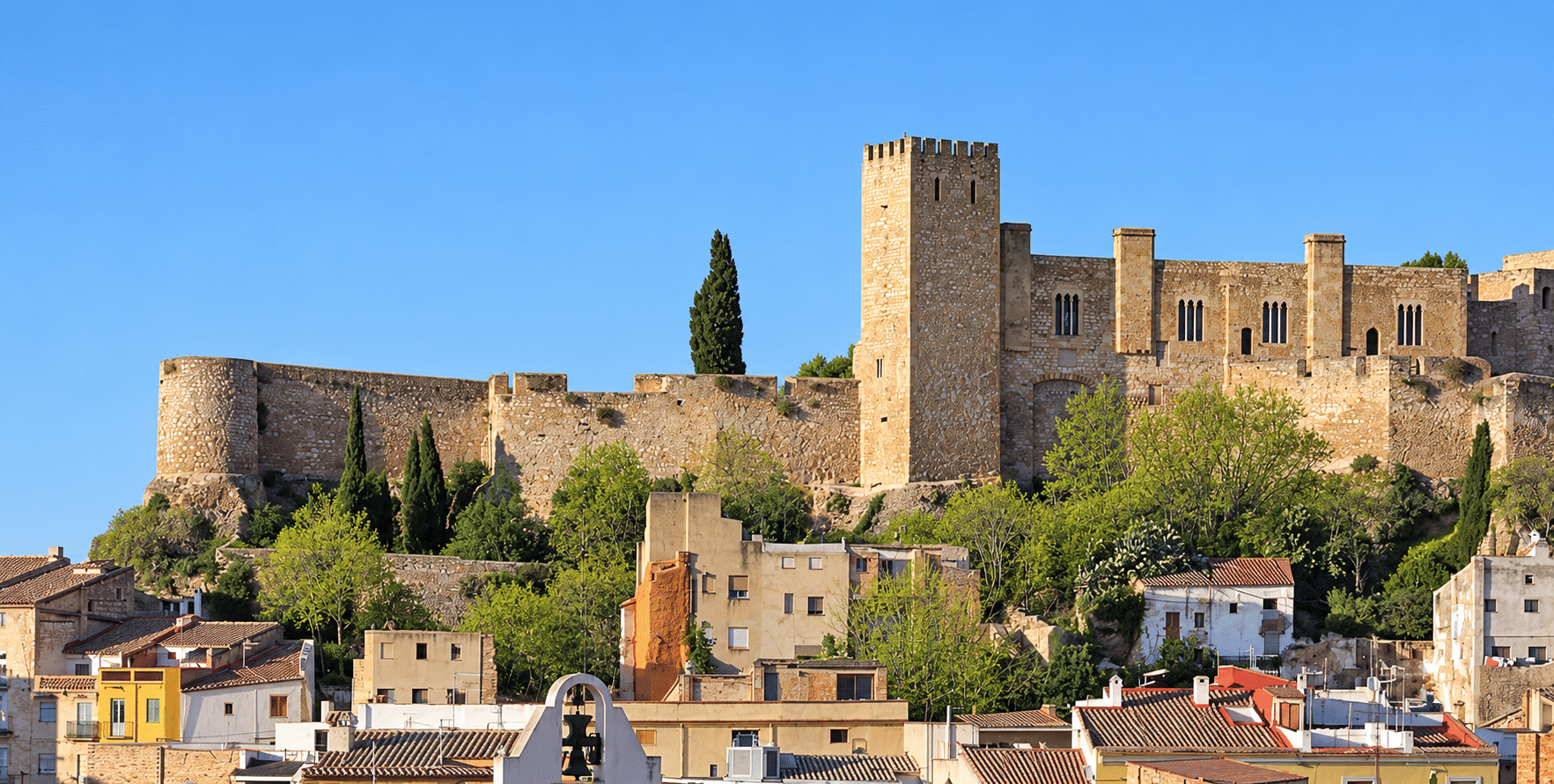
The Suda Castle in Tortosa, overlooking the city and the focus of the defenders’ final resistance during the siege of 1148. Author’s photograph.
The Order of the Hatchet of Tortosa: Historical Context
As I mentioned in the first article in this series, my focus at Llegendàrium is on folklore motifs, narrative themes and oral and popular traditions rather than historiographical questions. Nevertheless, a brief historical overview will help us understand the legend we have just read.
When Ramon Berenguer IV began the conquest of Tortosa in 1148, the city was known in Arabic as Turtuixa, a small but important urban, commercial and strategic centre in al-Andalus. It had been the capital of a taifa kingdom in the eleventh century and subsequently came under Almoravid rule, which was then disintegrating. Situated on the River Ebro and well connected to the Mediterranean, it possessed a port, shipyards, markets and renowned craft workshops that naturally sustained a thriving economy. Strong walls protected the city, dominated by the imposing Suda fortress, while the main mosque, baths and suburbs supported a rich urban life, in which the Jews had their own quarter. More than simply a military outpost on the frontier, it was a prosperous town with a long mercantile and cultural tradition reaching back to Roman times, when it was known as Dertosa. Possession of the city meant control of a strategic point between the Ebro valley and the sea. Andalusi Tortosa also controlled an extensive territory encompassing the lower Ebro, the lands of the present-day districts of Baix Ebre and Montsià, and areas extending towards Ribera d’Ebre, Terra Alta, Matarranya and part of what is now northern Castelló, with its boundaries changing over the centuries (Kirchner and Virgili 2015; Negre and Suñé 2019). Muhammad al-Idrisi (1100–1165), the traveller, geographer and scholar from Ceuta, described Tortosa shortly before its conquest:
“The city of Turtuixa stands at the foot of a mountain and is protected by strong walls. It has many markets and fine buildings, artisans and farmers, and large vessels are built there from timber brought from the surrounding mountains, which are covered with pine trees of remarkable girth and height.”
Its conquest and resettlement constituted a major military undertaking with crusading status: it enjoyed the support of Pope Eugene III, who granted indulgences to participants within the wider context of the Second Crusade. This religious character helped mobilise combatants from across Europe. The siege began in early July 1148 and lasted almost six months, until the end of December (Caffaro 1890, §§ 7–9; Virgili 2001b; Villegas-Aristizábal 2009). Ramon Berenguer IV assembled his forces, including Catalan nobles such as the Grand Seneschal, Guillem Ramon de Montcada, who had a cycle of legends of his own. Other prominent knights and barons, the flower of Catalan chivalry, brought their soldiers: Pere de Sentmenat, one of the most distinguished figures in the siege, who received the castellany of one of the Suda’s three castles and other privileges, including appointment as the city’s first veguer, or royal representative; Arnau Mir of Pallars Jussà, from the Urgell region, a veteran commander who had spent his life fighting; Guillem de Copons, appointed the city’s first batlle, or bailiff, after the conquest; and Ponç de Cervera, Viscount of Bas, who had abducted Almodis, the sister of Count Ramon Berenguer III.
There were also numerous Occitan contingents, including those of Guillem VI of Montpellier, another veteran ally of the count who had taken part in campaigns such as the conquest of Almería. After a life of constant violence and a pilgrimage to the Holy Land, he became a monk shortly after the conquest of Tortosa. They were joined by the troops of Viscountess Ermengarda of Narbonne, the Count of Barcelona’s first cousin, a patron of poets and troubadours who presided over one of the most brilliant courts in southern Europe. Among the most committed participants, as warrior monks, were the knights of the orders of the Temple, the Holy Sepulchre and the Hospital. The foreign forces also included notable Anglo-Norman and Flemish contingents, who had travelled from the distant north, attracted in part by the prospect of good pay. Above all, there was a powerful fleet from the Republic of Genoa, pursuing its own political and commercial interests (Caffaro 1890, § 7; Villegas-Aristizábal 2009).
Our knowledge of the siege of Tortosa comes chiefly from the Genoese chronicle, which naturally presents events from the perspective of its Genoese protagonists. In the account of the chronicler Caffaro, the conquest reads like a film or a novel, beginning with considerable difficulties. The army established separate camps according to the origins of its contingents. The disorganisation of so diverse a force, each group with its own leaders and interests, led the Genoese to launch a premature attack without authorisation. The resulting deaths and injuries on both sides prompted the commanders of the Christian forces to prohibit further assaults without prior agreement (Caffaro 1890, § 7). The successive assaults and counterattacks were exceptionally fierce. Archaeological remains offer evidence of this violence. In Plaça de la Cinta, an accumulation of bodies without a regular burial arrangement has been interpreted as a possible emergency burial pit associated with the conquest. Human remains showing signs of violence were also found in the Suda necropolis, in layers dating to the mid-twelfth century (Kirchner and Virgili 2015, p. 120). A cemetery was also established for foreign combatants, the fossarium anglicorum, or “cemetery of the English”. A particular feature of this siege is that, like other conquests granted crusading status, it probably attracted people of every background and age who had no military experience but were religious pilgrims. A field where pilgrims had been buried was mentioned in 1149, and the cemetery appears again in documents from 1164 and 1166 (Virgili 2009; Villegas-Aristizábal 2009).
Despite these difficulties, the lower districts, suburbs and medina were occupied relatively quickly. The defenders, however, withdrew to the Suda, whose resistance prolonged the siege. Caffaro also explains that a shortage of money caused many knights to withdraw, leaving the count with only twenty of his most loyal followers (Caffaro 1890, § 9). Financial contributions from Barcelona Cathedral, its devotees and wealthy families in the County of Barcelona enabled the military campaign to continue (Virgili, “Conquesta i feudalització de les terres de l’Ebre”, n.d.). Probably the most prominent contributor was Bernat Marcús, a Barcelona burgher from a family of Greek descent, who established Europe’s first private postal service for merchants. Eventually, the besieged negotiated a period of forty days in which to obtain outside assistance, handing over hostages as a guarantee. When relief failed to arrive, they honoured the agreement and capitulated on 30 or 31 December, surrendering the Suda to the count (Caffaro 1890, § 9).
Victory set in motion the division of houses, lands and seigneurial rights. The Genoese received one-third of the city, while the remainder came under the count and his allies, particularly the powerful Montcada family. These initial arrangements changed over the following decades. In 1153, for example, the Genoese sold their third to Ramon Berenguer IV (Virgili 2001a; Caffaro 2007, introduction), with the exception of the so-called “Island of Genoa”, also known as Sant Llorenç, in the Ebro opposite Tortosa, in the area now occupied by the Ferreries district. Ownership of the island was eventually consolidated in the hands of the chapter of Genoa’s Cathedral of San Lorenzo, which encouraged settlement there, and a separate parish was established. The Bishop of Tortosa purchased it in 1289, and by the end of the Middle Ages it had joined the riverbank and ceased to be an island.
A year after the conquest, privileges and guarantees were granted to Christian settlers, who arrived gradually. Most were Catalans, but there were also Occitans, Aragonese, Italians, Flemings and people from Britain, attracted by the prospect of acquiring houses, land and new sources of income. Some of the foreign participants in the conquest settled in the city and left descendants there. The Muslims who remained were less fortunate. They became a subject population and, despite the guarantees they had received, suffered dispossession and increasing economic subordination, with residential areas outside the fortified enclosure. The Jewish community fared better, receiving its own charter of liberties in December 1149 and the former shipyard as a site on which to build homes (Virgili 2001a; Kirchner and Virgili 2015; Virgili 2009). Over the following centuries, Tortosa remained one of Catalonia’s most prosperous cities, becoming one of the five leading cities of the Principality. It retained a largely medieval urban layout while acquiring Renaissance buildings, artworks and educational institutions.
Renaissance Tortosa became an important commercial and episcopal centre with a notable cultural life. It still bore the consequences of the crises, wars and epidemics that had affected all of Catalonia during the fifteenth century, and had lost some of its earlier economic dynamism. At the same time, the sixteenth century was a good period for the city: houses and public buildings were renovated, and substantial artistic investment connected Tortosa with European Renaissance currents. The Dialogues reflect this combination of pride in Tortosa’s past and resources, satisfaction with certain improvements and criticism of its rulers’ neglect. Most relevant here is that Despuig recovered the legend of the women and the hatchet in this atmosphere of civic affirmation, which also extended to Catalonia as a whole (Solervicens 1997).
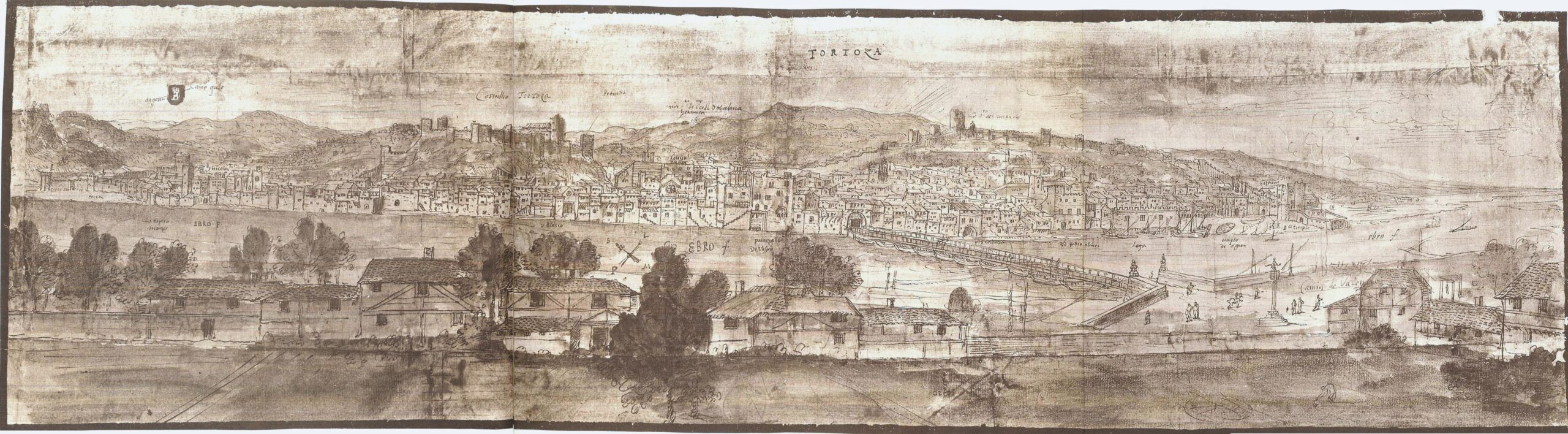
Did Despuig Invent the Legend?
Among the few documents concerning the conquest and resettlement of Tortosa, there is no reference to the Order of the Hatchet, or to the legend, until we reach the manuscript of Cristòfor Despuig, a gentleman writing centuries later (Villanueva 1806, Letter XLIII; Massip 1967). It is striking that historians such as Jeroni Pujades (1568–1635), who devotes extensive and detailed chapters to the conquest of Tortosa in the eighth volume of his Crònica Universal de Catalunya, do not give the legend so much as a line. Nor do Pere Tomic (?–1481) or Jerónimo Zurita (1512–1580), who also wrote about the conquest in Històries e conquestes dels Reys d’Aragó e Comtes de Barcelona (1438) and Anales de la Corona de Aragón (1579), respectively. This has fuelled an enduring debate over whether the legend circulated orally or was the author’s invention. Cristòfor Despuig probably received a refined humanist education, belonging as he did to one of Tortosa’s most important families. He was the son of Joan Despuig i Pinyol, the city’s chief procurator, and a descendant of one of the four knights who, according to another legend I will discuss in a future article, were the first to storm the walls of the city on the Ebro. Like his father, he played an active role in Tortosa’s municipal government (Biblioteca de Tortosa, “Pere Joan Despuig” and “La mare de Despuig”; Solervicens 1997).
Yet Despuig wrote the Dialogues as a literary work with several purposes, including the recovery and commemoration of the city’s customs and traditions. Referring to the privileges of Tortosa’s women and the associated legend, he therefore writes that “it is certainly a great misfortune that something so exceptional and important should lie so deeply buried”, or that “it has been a terrible thing to let something so remarkable disappear”.
He also says that the things he is about to relate are “difficult to believe and take a long time to tell, nor will anyone believe them unless we proceed with the records in our hands”. And he tells us that on this subject “I have read and heard”, suggesting that earlier documents may have discussed the order and that the story circulated as an oral local legend. For these reasons, we need not necessarily doubt his word, since other people in Tortosa could have accused him of lying during his lifetime. Had it been an invention, Despuig, as a member of an important family, knew that a falsehood could bring dishonour and damaging rumours upon him. If, on the other hand, it was something known in the city but increasingly forgotten, his account would have met with ready agreement.
Moreover, the gentleman includes some references to the transmission of the story that are particularly interesting from a folkloristic perspective. For example, he says he heard the elderly cathedral lecturer Baltasar Sorió explain that he had seen scapulars bearing the hatchet emblem at an archdeacon’s house. They were no longer worn at the time, “but they cannot have been abandoned for very long, since they could still be found in the ladies’ houses”. The custom would therefore have been discontinued roughly a generation earlier. He also mentions his parents, Francesca Sabertés de Despuig and the aforementioned Pere Joan Despuig, explaining that his mother had told him that “in her early years many of those garments bearing hatchet emblems could still be found in Tortosa. She said that scarcely an honourable woman was without one, although they were no longer worn then either” (Biblioteca de Tortosa, “La mare de Despuig”).
Some literary shaping is evident in the work of a man with his learned, humanist education, and he makes no attempt to conceal it. He cites the siege of Numantia, for instance, as an inspiration for the legend, at least for the episode in which the council decides to burn the city. That siege, described by classical authors whom Despuig may have known well, such as Pliny the Elder (23–79), had already acquired mythical status in Roman times. Cervantes, to name an author roughly contemporary with Despuig, wrote his play The Siege of Numantia in 1585. Despuig also takes the opportunity to assert local pride: unlike the other peoples of the peninsula, his townspeople will win the siege rather than take their own lives. In the second part, we will consider other possible classical influences, including the Amazons. The debate between men and women, and his accusation that men have misogynistic reasons for failing to remember the legend, recall other works of the Renaissance, such as Bernat Metge’s Lo somni (The Dream), which I discussed in this article, as well as humanist classics such as The Book of the City of Ladies by Christine de Pizan (1364–1430), written in opposition to the misogynistic positions of the earlier Romance of the Rose by Lorris and Meung (thirteenth century). Despuig only briefly enters a much broader debate about the condition of women, one he would surely have known through his education. This debate had been unfolding for centuries and was particularly active in the sixteenth century through the famous querelle des femmes, which had emerged in the early fifteenth century, especially through Pizan’s work (Kelly 1982). Later works would provoke controversy through their defence of women, including the pamphlet Jane Anger, Her Protection for Women (1589), Olivia Sabuco’s Nueva filosofía de la naturaleza del hombre (1587), and Il merito delle donne (1600) and La nobiltà et l’eccellenza delle donne (1600), by the Italian writers Moderata Fonte and Lucrezia Marinelli.
Despuig declares himself a defender of women, and I think we can discern his mother’s considerable influence upon him. The women’s intervention begins before they take to the walls, when they reject the men’s desperate plan to kill them and the children before going out to die in battle. It is the women who imagine an alternative and persuade the council to carry it out. Their narrative strength lies as much in their courage as in their ability to deliberate, which proves superior to that of the men. In this respect, Despuig is doing more than commemorating or reworking a legend: he is also taking an ideological and ethical position.
Alongside these clearly visible literary features, however, we can also identify structural elements and folklore motifs that appear in almost identical forms in other legends concerning medieval sieges or sieges involving women, which I will also discuss in the second part. Some of these motifs have circulated for centuries, long before Despuig. I reproduced one such story in full in the article about the young Count Guifré: the Germanic legend of the Longbeards, or Lombards, in which women disguise themselves as men and arrange their long hair to resemble beards in order to intimidate the enemy army.
The Customs Associated with the Legend
For these reasons, and for everything discussed above, I doubt that the legend was simply Despuig’s invention. Moreover, it is associated with a series of customs and traditions which, importantly, were popular rather than institutional in character, sustained by tradition. Others, such as tax exemptions and rights over clothing and jewellery, did have a legal dimension.
His distinction is revealing: “What was done, or what I have found was done, is this.” He then lists some of the customs observed in memory of the legendary feat: “When a bridegroom went to the bride’s house to take her to Mass, as is customary, the women accompanying her, who were always numerous, should walk ahead of all the men, even if royal or municipal officials were among them.” He repeats that this custom had been observed in Tortosa until quite recently. He also mentions “that women should pay no duties on their veils and other headwear. And if they outlived their husbands, all the clothing and jewellery their husbands had provided for them should remain their own property, whatever its value.” And “when the couple attended their wedding Mass, the bride should sit on the right”, meaning the place of honour or greater importance. Once again, he is candid about this last point, acknowledging that “I cannot be as certain of it as I should wish”.
For a modern reader, perhaps the most striking element is the garment some women wore, presumably on solemn occasions and at civic festivities. “To preserve the memory of that feat, the women were to wear a battle-axe emblem of crimson or scarlet cloth over a garment called a ‘passatemps’.” Despuig compares the passatemps to a Carthusian friar’s scapular: a straight, rectangular piece of cloth passing over the shoulders and hanging down the chest and back, usually at considerable length, while leaving the arms free. According to the author, it resembled a military surcoat, a garment worn over armour. The knights of Calatrava, for example, wore a scapular beneath their tunic as a symbol of their religious vow, combining a life of prayer with their military role and the defence of Christendom. Over time, large cloth scapulars diminished in size, becoming small pieces of fabric joined by ribbons or, today, small religious medals and items of jewellery, similar to amulets, which may express personal vows and devotion to saints or to images of Christ or the Virgin Mary. Other traditions have retained or modified the larger scapulars. The Carthusians’ scapular or cowl is white, like their habit, and I consider it plausible that the garment associated with the Order of the Hatchet was also white with a crimson battle-axe. Despuig, however, does not specify its background colour, so nothing definite can be said on this point (Carthusian Order, Statutes, Book III).
The origin of the name passatemps is uncertain. I can suggest four possibilities, without presenting any of them as established. The first would connect it with the word’s usual meaning of “pastime” or “amusement”: a nickname for a conspicuous garment intended for display or particular social occasions. I consider this rather unlikely. A second possibility is that passatemps was a local term for an item of clothing, or a nickname whose original meaning has been lost. A third, even less likely possibility is mentioned by Villanueva, whose account we will examine in the second part: a connection with the Latin pastinum, an agricultural implement resembling a hoe. The scholar himself dismisses it as implausible (Villanueva 1806, Letter XLIII). The possibility I find most persuasive is a symbolic interpretation connected with the passage of time. Since the garment was intended to perpetuate the memory of the feat, its name might evoke the transmission of memory between generations: the passing of time, associating it with something old, something from long ago.
Whatever the passatemps looked like, and whatever its name meant, what is particularly striking is that the garment appears to confer military honours, those of a Christian combatant, upon the women of Tortosa. In the second and final part of this article, we will see how successive versions of the legend expanded upon this detail, transforming the story within learned circles between the sixteenth and eighteenth centuries, before it returned, considerably altered, to oral transmission in the nineteenth and twentieth centuries.
To conclude this first part, and to return to the question raised earlier of whether Despuig invented the story, the legend can be interpreted in three ways. It may have been a popular invention, circulating orally to explain customs, privileges or laws whose original purpose had been forgotten. It may have developed alongside those customs, preserving a highly folklorised and idealised memory of some historical event unknown to us. Or the customs may have emerged after the legend, as a way of celebrating or remembering events that never happened but were believed or presented as real out of local pride. The surviving documentation makes it impossible to determine which of these explanations is the most convincing.
Whatever the case, the testimonies Despuig incorporates make it unwise to dismiss the legend as his own invention, although they do not allow us to establish how extensively he reworked earlier material in an effort to preserve its memory, however fragmentarily. The fact that we are still discussing it in the twenty-first century, and that in Tortosa the emblem is awarded to girls and young women representing the city’s associations, seems to me a good indication that the gentleman succeeded.
© Arnau Folch / Llegendàrium. This article may be shared by linking to the original publication. Reproduction, translation, adaptation or distribution in full is not permitted without prior authorisation.
